Credits: Getty Images

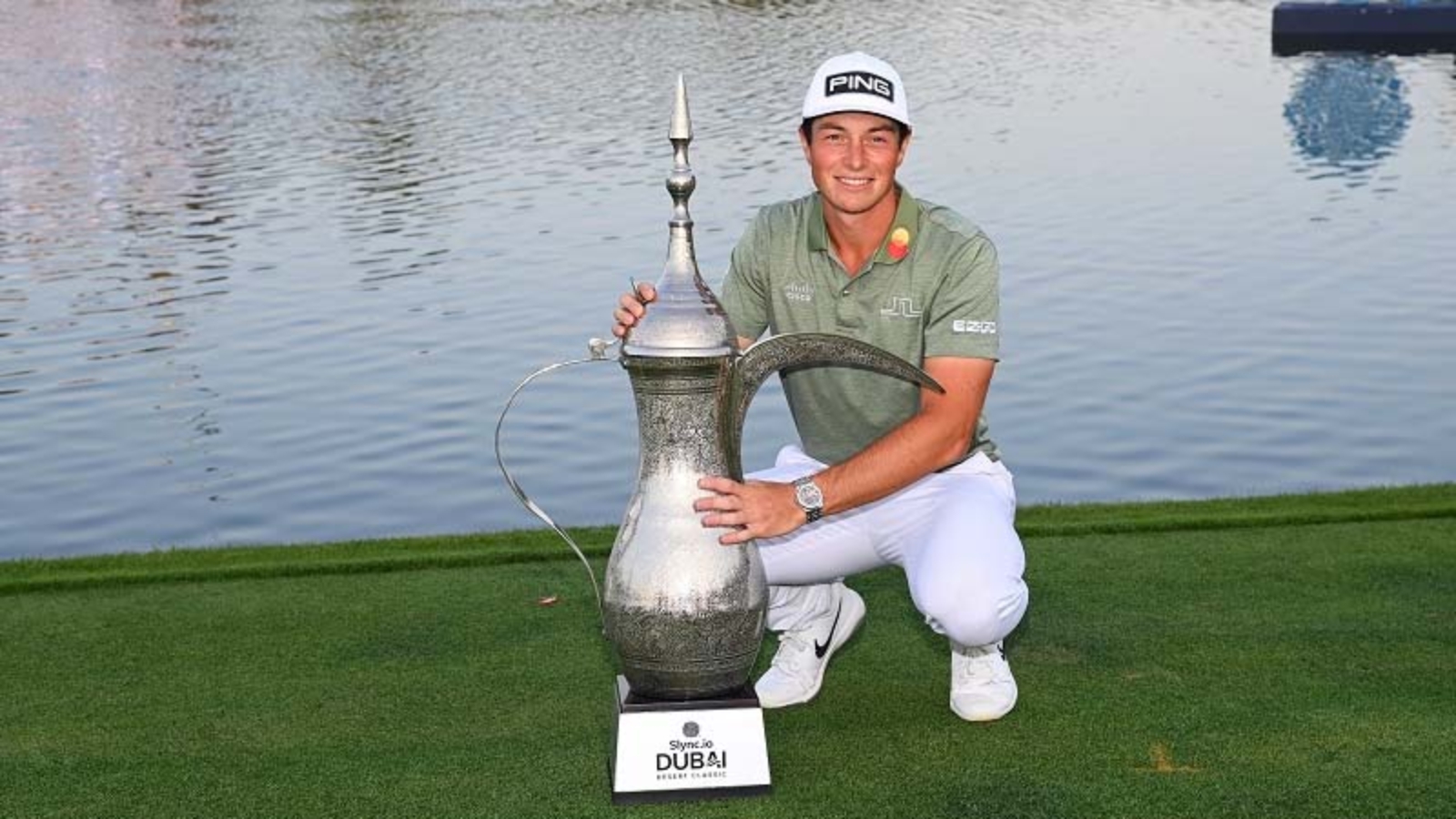
Viktor Hovland continues winning run with playoff victory in Dubai Desert Classic

DUBAI, United Arab Emirates – Viktor Hovland beat Richard Bland in a playoff to capture the Dubai Desert Classic on Sunday after Rory McIlroy missed a chance to win the title in regulation by bogeying the last hole.

Hovland claimed his third victory in five events by making birdie from inside 3 feet at the first playoff hole – the 18th – at Emirates Golf Club. Bland had just missed a birdie putt from longer out.

Both players finished on 12-under par. Hovland shot 6-under 66 after finishing birdie-eagle-birdie, while Bland birdied the last for a 68.

McIlroy was tied for the lead with Hovland and Bland heading down the 18th hole, only to send his approach shot from 267 yards into the water in front of the green. His par putt, which would have sent him into the playoff, brushed the edge of the cup.

McIlroy, who shot 71, was looking to win the event for the third time – 13 years after the first.

“This is pretty wild, I didn’t really think this was possible going into today,” Hovland told Sky Sports. “I knew I had to shoot a real low number, but a lot of things had to go my way. I’m thankful that it did.

“I was fuming after the three-putt on 15. I felt that was it. I just had to try to finish off well and I rolled a really long one in on 16 and then, on 17, hey, we got a shot. I’m pumping right now. It’s a bit surreal.”

The 24-year-old began his round way off the pace but put himself among the contenders with four birdies on his front nine.

His hopes took a knock as he bogeyed the 15th but he then surged into a share of the lead on 11 under with stunning back-to-back efforts on his next two holes.

He first holed a 35-foot birdie putt at the 16th and then eagled the par-4 17th after a tee shot onto the green, which coincided with third-round leader Justin Harding all but seeing his hopes disappear with a triple-bogey at the 11th.

McIlroy was still looking strong, however. Two behind Harding overnight, the Northern Irishman had a wobble himself after being forced to take a drop on the 10th, but he recovered to salvage a bogey and then birdie the 11th. He then responded to Hovland’s charge by picking up another shot on the 13th to move one ahead.

Hovland, further ahead on the course, was not done yet, though, and he claimed another birdie on the last to set a clubhouse target of 12 under.

This was later matched by Bland, who – after three successive birdies around the turn – had put himself within striking distance and quietly stayed in the picture.

After a steady back nine, the 48-year-old then finished strongly with clutch birdies at the 17th and 18th to join Hovland with a 276 aggregate.

McIlroy, however, still had the closing holes to play and the tournament appeared to be his for the taking.

Yet he was unable to edge ahead and began to lose his shape as a wild drive at the 17th put him in thick rough. From there he could only knock towards the fairway and it took a superb approach shot to ensure he saved par.

He did not make the most of that reprieve when he found the lake with his second shot on the closing par 5.

That left Hovland and Bland, who is enjoying a late career renaissance after his victory at last year’s British Masters, to fight it out. Hovland held his nerve and Bland, despite an excellent chip onto the green, was unable to match the Norwegian’s birdie in the playoff.

Harding along with Sam Horsfield, Tyrell Hatton, Adrian Meronk and Erik Van Rooyen all finished on 8 under in joint fourth.

Credits: mn2s.com

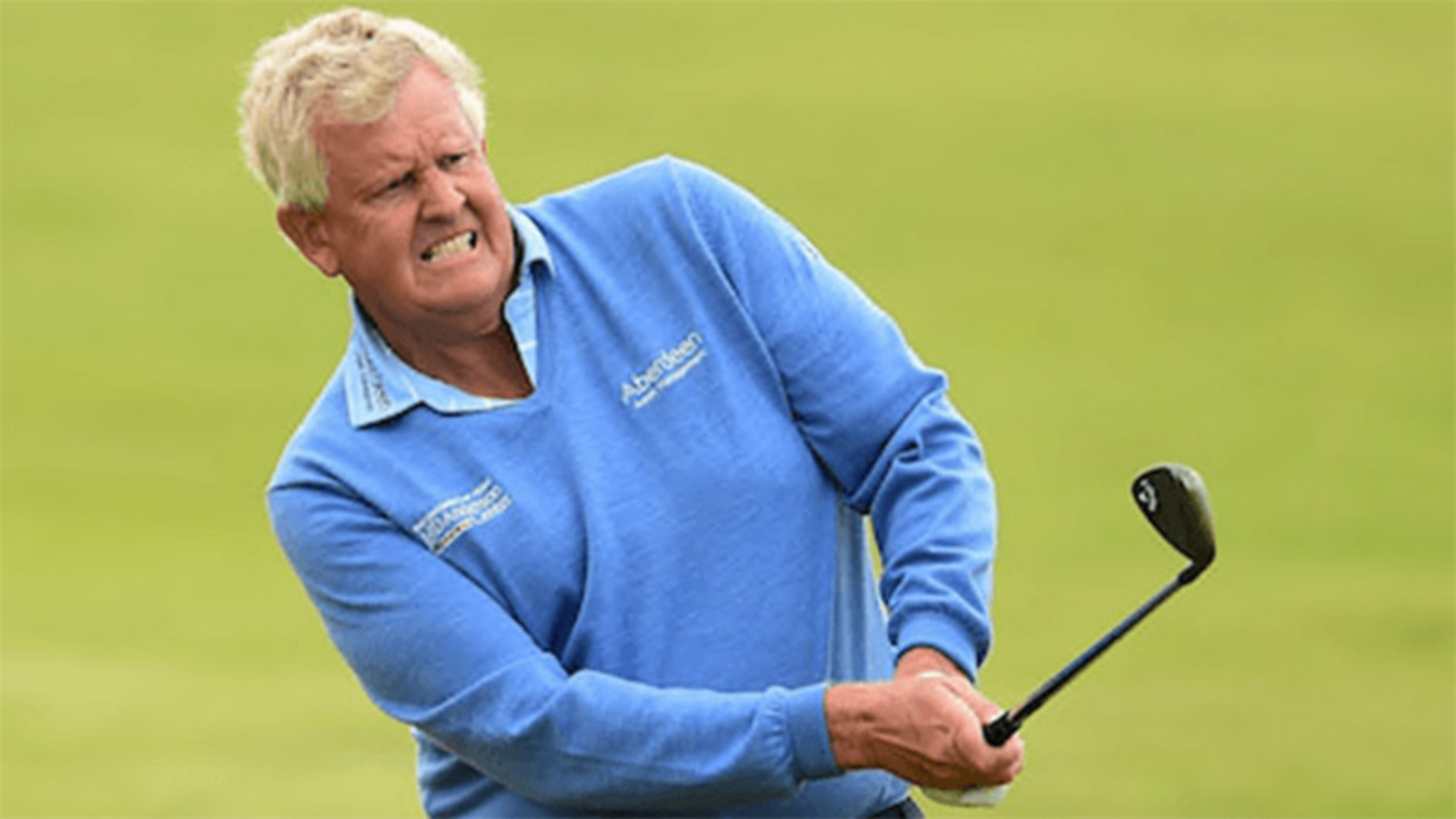
PGA Tour and DP World Tour must ‘fight off’ Saudi-backed Asian Tour – Colin Montgomerie

Colin Montgomerie has called on the PGA Tour and DP World Tour to “fight off” the threat of a Saudi-backed Asian Tour and avoid a “seismic shift” in golf.

The Asian Tour has been boosted by a $200m investment from the Saudi Arabia government’s Private Investment Fund.

There are fears this could lead to a Super League in the men’s game.

“It’s a shame it’s come to this. We used to work well with the Asian Tour and now we are at loggerheads because of money,” Montgomerie told BBC Sport.

“It’s a problematic issue. It’s that horrible, evil word, money. The mighty dollar ruling people’s hearts and minds.

“We never played the game for money as such on the European Tour [now DP World Tour] when I first started out. I was trying to see how much better I could get as a golfer. Now it’s all about that evil word, money.

“It’s a shame. Let’s hope the European Tour is closer to the PGA Tour than we’ve ever been before and we can fight it off.”

Golf is one of several sports used in Saudi Arabia’s efforts to rebrand itself amid concern over its record on human rights, a process regarded in many quarters as ‘sportswashing’.

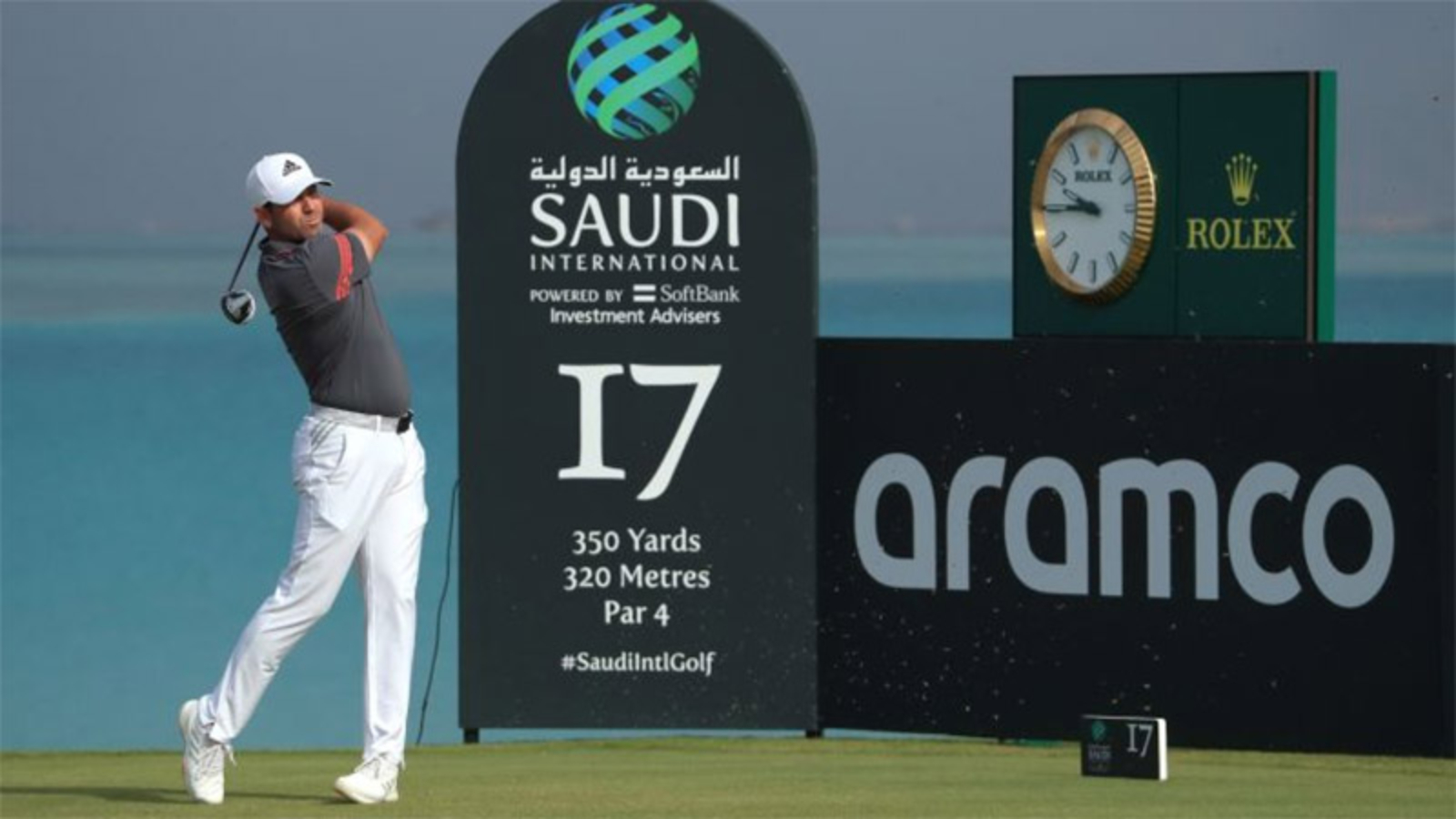
Next week’s Saudi International, which had its first three editions on the DP World Tour, switches to the Asian Tour and becomes its flagship event, with a prize fund increased from $3.5m to $5m. Organisers claim it will be the strongest international field assembled on the Asian Tour.

It has attracted more than 20 of the world’s top players, including American major winners Bryson DeChambeau, Dustin Johnson, Phil Mickelson and Bubba Watson, as well as Olympic champion Xander Schauffele.

The likes of European Ryder Cup players Paul Casey, Tommy Fleetwood, Sergio Garcia, Tyrrell Hatton, Shane Lowry, Ian Poulter and Lee Westwood are also scheduled to tee it up at the Royal Greens Golf and Country Club from 3-6 February.

“This is only the beginning,” former world number one Greg Norman said in November after being unveiled as chief executive of Liv Golf Enterprises, which is funding 10 new Asian Tour events to be staged annually over the next 10 years.

“You can guarantee Greg Norman is going to be there and the Saudi hierarchy is going to be there, trying to get as many top players as possible,” said 58-year-old Montgomerie, who won the European Tour’s Order of Merit a record eight times.

“There are some big names from the US coming over to participate and be courted into this system and let’s hope, putting my old man’s hat on, let’s hope we fight it off.

“We’ve had a couple of these ideas before, other leagues trying to damage the game which was never broken. The PGA and European Tours are not broken, they are in good health. So why try to fix something that isn’t broken?”

The fight has already begun with the PGA Tour’s flagship event, The Players Championship, doubling its prize pot and threatening Ryder Cup sanctions.

“The Players was a $10m event two years ago. This year it’s a $20m event,” Montgomerie pointed out.

He also said the $40m Player Impact Fund, brought in by the PGA Tour to reward popularity over success, was another example of the PGA Tour “trying to keep their top players”.

“That money could have been used to promote the women’s game,” he added. “It’s a ridiculous amount of money to be thrown at people who don’t need it.

“But they know this problem is coming from Saudi and they need to sustain what they have.”

However, the Scot accepts it is tough for players given the “scary” amount of money involved.

“As self-employed individuals, can you blame them? But they’ve got to remember where they started and give some of that back,” he added.

“The ruling bodies of the European and American tours have said if you go the Saudi way then forget about the Ryder Cup, forget being captain and playing.

“It’s going to be an interesting few months ahead.”

Credits: Getty Images

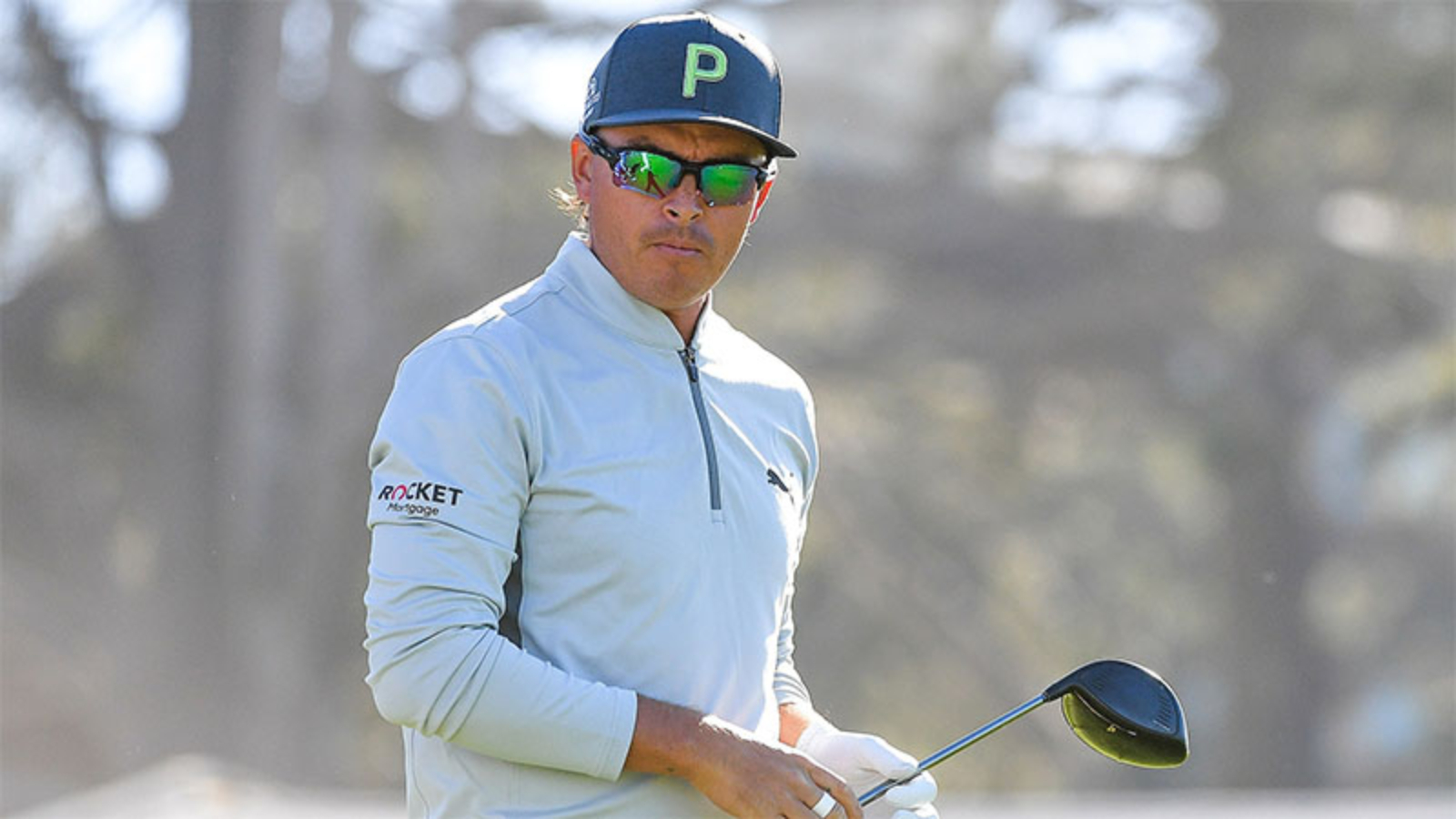
With new swing thought, a ‘more deliberate’ Rickie Fowler shoots 66

Don’t be alarmed if Rickie Fowler lacks his usual pop this week at the Farmers Insurance Open.

That’s by design.

“I felt like I was swinging at about 60% and took about three hours to get to the top of my backswing,” Fowler said. “That’d roughly be the feelings of it.”

Fowler is trying to be more deliberate throughout the swing, with a smoother tempo and rhythm. So far, so good, since he opened with a 6-under 66 on Torrey Pines’ North Course to sit just three shots off the early lead. The bogey-free round marked his best-ever opening score in his 13th start in this event.

Fowler has had few opportunities to build off of his encouraging tie for third at the CJ Cup, where he produced one of the best ball-striking weeks of his career. He failed to crack the top 40 in each of his next two starts, became a father for the first time, and then opened 2022 with a missed cut at The American Express, dropping him outside the top 100 in the world rankings.

Fowler put in plenty of time on the range ahead of the Farmers, and that’s when he stumbled upon this new swing key.

“I’m not necessarily getting full numbers,” he said of his distances. “I’m not trying to; I’m trying to stay a bit more controlled. So for now, I just need to make sure the club is at least in a little better spot and everything’s working together a little bit better. I’ll be able to create more speed once things feel a little bit more comfortable, but just trying to make sure we are doing things right.”

Fowler’s easy swing (he still averaged 306 yards a pop) stood in stark contrast to his playing partner, Bryson DeChambeau, who always takes a mighty lash off the tee. Though ShotLink data isn’t available on the North Course, DeChambeau was routinely 25 to 50 yards ahead of Fowler throughout the day.

Not that it mattered in the end: Fowler’s 66 bettered DeChambeau’s 70 (and Jordan Spieth’s 70, too).

“I feel like things are very close and in a good spot,” Fowler said, “but heading in the right direction, too.”

Credits: K.C. Alfred

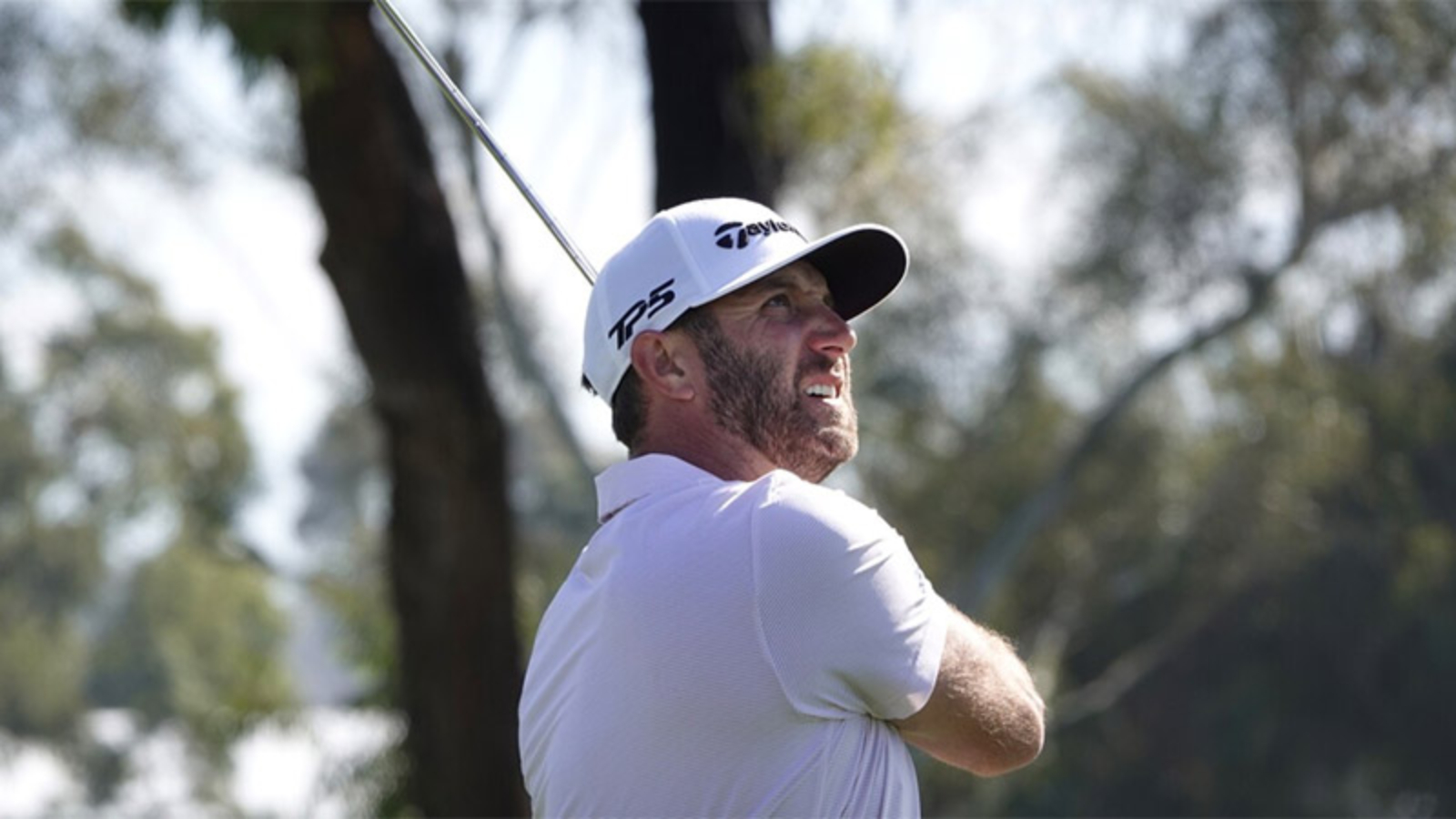
Frustrated with last year, Dustin Johnson took three months off and comes back to big test at Torrey Pines

When Dustin Johnson takes a break from golf, he’s as serious about committing to it as he is prepping for a major. “Fishin’” ranks up there on the priority list, as does just hanging around the house with finacee Paulina Gretzky and their two kids.

Golf? It’s something to avoid thinking about as much as possible for the No. 4 player in the world. Which is why when he was asked to define how little he’s played over the last three months leading into this week’s start in the Farmers Insurance Open at Torrey Pines, Johnson broke into a grin that combined mischievous and sheepish.

“A couple times,” he said.

It is so DJ, of course. The man who speaks as languidly as he walks seemed as relaxed as ever, smiling frequently, entering his first event of the calendar year in a tournament that, with the U.S. Open-pedigreed South Course to be battled for three rounds, requires fairly well-honed skills. With the scheduling working out this year before Johnson heads to the Saudi Invitational next week, he’s playing in his first Farmers since 2017. He’s not fared particularly well here, either, including missing two of the last three cuts.

“It’s a golf course,” Johnson said with a shrug about starting the year with a daunting challenge. He paused, though, because this isn’t like starting your year in nearly zero rough and perfect greens in the desert. “I did step on the first hole of the North on Sunday afternoon when I got here and I’m, like, ‘Whoa, this fairway’s narrow,’ he said. “I’ve been playing at home in Florida—the fairway’s a bit wider. A little like I was hitting down at hallway [at Torrey Pines]. But it’s nice. It’s a really good spot to know what kind of shape my game is in.”

Johnson, 37, clearly needed a long break after an extended season due to the pandemic that began in September 2020. He won the Masters that November, but 2021 was a frustrating mix of not being able to put all of his game together in the same week. He wasn’t terrible, posting nine top-10s among his 21 starts, and he was positively stellar in the Ryder Cup, becoming the first American to go 5-0 since 1979. But the majors are a point of motivation, and a missed cut at Augusta after a too-short time as reigning champ, along with another open weekend for the PGA Championship, left a dissatisfied residue on the year.

“It was frustrating to me just because I just wasn’t consistent,” Johnson said. “Obviously, I put a lot of good rounds together, but I just couldn’t put four rounds together. It felt like when I was hitting the driver good, I wasn’t hitting my irons very well. If I was hitting my irons well, I wasn’t driving it good. Just nothing was matching up. It just gets frustrating when you do it for eight months straight. Especially after like the fall I had the year before, it was really frustrating.”

He added, “One thing that I was really frustrated with was with my driver and we got a new driver this year, the new [TaylorMade] Stealth driver, and I really like it. So that was one reason why I wasn’t playing or took a break, until I could get the new driver and start practicing with it.”

Johnson gained nearly two yards in average off the tee last year and ranked seventh on the tour in distance (312.9 yards), but he fell to 136th in accuracy (57.87 percent) and his strokes gained/off-the-tee took a hit. He was 11th in that stat in 2020 and fell to 21stI last year. Not a steep drop, but the margins are small in Johnson’s lofty atmosphere.

Another arduous season is coming for the 24-time winner on the PGA Tour. And it looks a lot more promising after three months of vacation, when one of the biggest concerns of the day is if the fish would bite. Asked to put.a number on his angling handicap, Johnson said, “I mean, it’s fishin’. Some days I’m a plus-6, some days I’m an 18. It just all depends.”

Credits: Getty Images

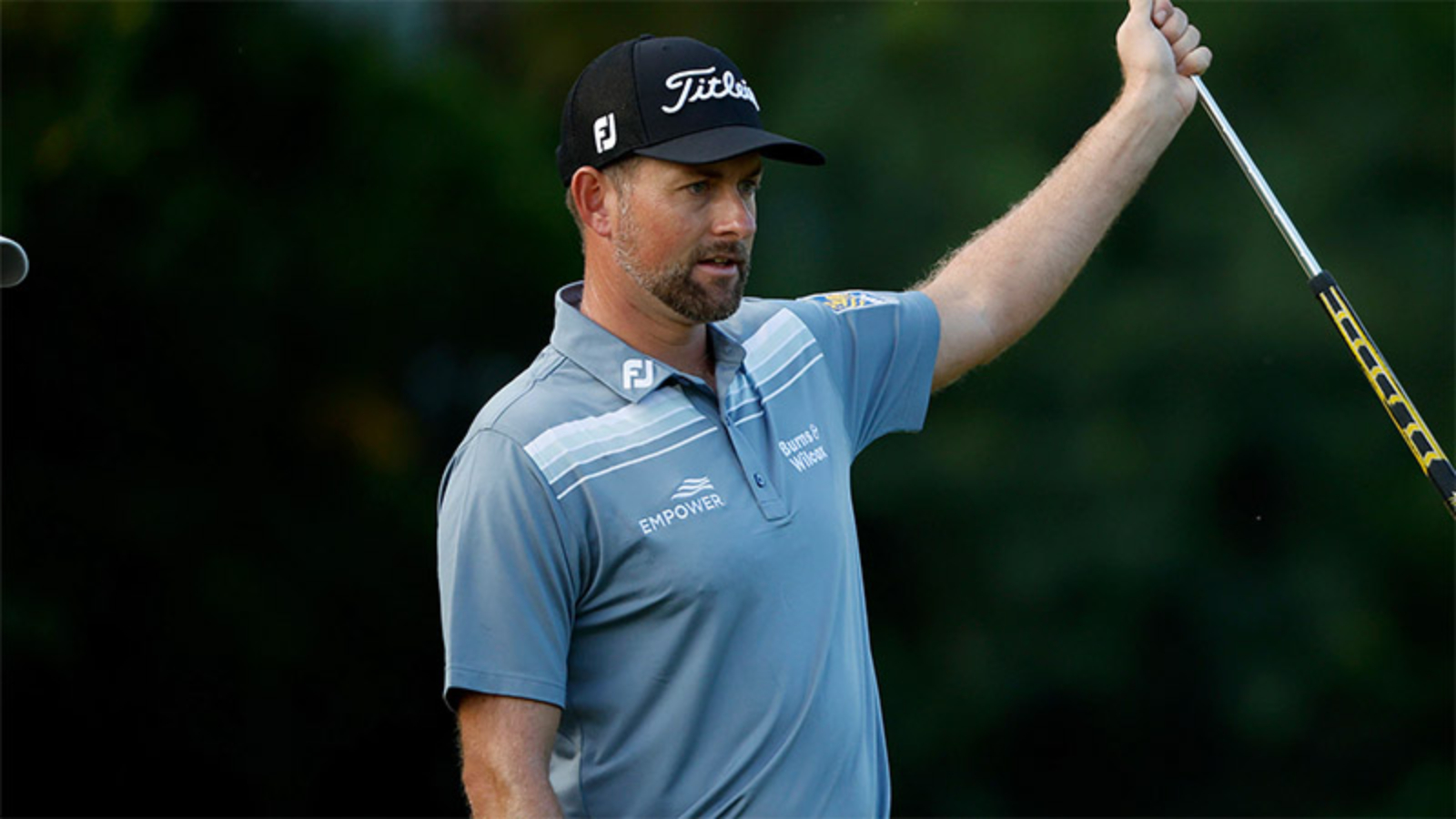
Webb Simpson, after lessons with Butch Harmon, is looking to bounce back in ’22

A new year means a fresh start, and that’s exactly what Webb Simpson craves as he makes his 2022 debut at the Sony Open.

“2021 was a frustrating year for me,” Simpson said Tuesday. “Battling flu, COVID, neck injury, and I feel like that crept into my golf game.”

As those ailments plagued his game, he failed to record a win last year and he missed out on the Tour Championship and Ryder Cup for the first time since 2016.

“It was really hard for me not to be [at the Ryder Cup],” he said. “Because I’ve experienced the joy of winning the Presidents Cup three times, but 0-for-3 in Ryder Cups.”

Last year was a year like no other for the 2012 U.S. Open winner, but he’s using the hardships as a lesson moving forward.

“It was a letdown year, I guess, this past year,” he said. “And I realize, you know, I have a lot of sympathy for guys who have gone through injury because I had never gone through it and it really messes with you for a while. It hinders your workouts and it hinders your practice.”

But once Simpson got healthy, he returned to competition during the PGA Tour’s fall slate. Following a missed cut in his first start at the Shriners Open in Las Vegas, he sought out one of the game’s best swing gurus just as others like Rickie Fowler and Danielle Kang have done recently.

“After the Shriners tournament, I got a lesson from Butch Harmon and Paulie [caddie Paul Tesori] and I and Butch all agreed I needed to get more on top of the golf ball and kind of shallowing out a little bit and we saw some good changes at CJ Cup and it got even better at RSM,” Simpson said.

The lessons paid off. He finished T-14 at the CJ Cup, which was last fall’s strongest field, and then T-8 at the RSM Classic, though, he admits he felt he never had a chance to catch Talor Gooch, the RSM’s eventual winner.

At 36 years old, Simpson believes that there’s still time for him to get back to his winning ways and some of the game’s elder statements who have notched victories lately have given him the confidence to do that.

“In my mind, I’ve got a good 10 years left,” he said. “Stewart Cink is giving me a lot of hope. He’s playing some awesome golf, winning golf tournaments in his mid-40s. If I can stay healthy and keep loving golf, I mean, I still love golf, which is a blessing. I think it’s easy to burn out. I’ve burned out many times.”

Now fully healthy once again, plus with what he’s worked on with Harmon, Simpson is excited about the future and thinks 2021 could just be a blip on the radar.

“I feel like my game is in a good spot,” he said, “and I fully believe my best golf is ahead of me.”

Credits: feedlily.com

Jon Rahm reviews last season, describes his time off and outlines his plan of attack: ‘Golf is not a hitting contest’

Jon Rahm: “Being World No 1 is something you’ve got to earn. I’m No 1 because of how I have played in the past, so if I want to stay here, I’ve got to keep playing at the level and keep trying to get better.”

After last season’s success, my goal is to beat it. My goal is always to do better each year. It’s hard to say because I’ve had such a consistent year (15 top-10s) and had one win, but I can tell you right now I would gladly take a bit more inconsistency and have more than one win.

It all depends on how you categorize it. In the sport that we play, it’s hard to only count wins as successes. You can’t just think about a second place as a loss, right? Obviously, the goal in my mind is for me to have a better year.

Being World No. 1 is something you’ve got to earn. I’m No. 1 because of how I have played in the past, so if I want to stay here, I’ve got to keep playing at the level and keep trying to get better. At the end of the day, I can only focus on myself.

I will try to improve my game and improve my level of golf. If I can do that and play the way I know I can play, everything else should take care of itself. I’m not thinking constantly of ‘Oh, he’s No. 2 or he’s coming for me or I need to do this or that.’ I’m trying to play the best that I can and hopefully win a tournament. I’m hoping I can have another quality year and win multiple times.

From June of 2020 on, we played a lot of golf and I ended up getting two wins and played really good golf in the majors. And then right away, when everybody has time off, I changed manufacturers and worked harder than I’ve ever worked.

I did not want changing clubs to be an excuse, so I did a lot of work and ended up playing great during the year. I was prepared for the first few months to be a bit of a struggle but all the hard work I put in paid off and I started right out of the gate playing great golf and having chances to win. I had my moments with Covid, became a dad, won a U.S. Open, played amazing golf and then played a great Ryder Cup.

However, when the Ryder Cup was over, I was drained from the previous year and a half. I went back to Spain and I just needed a break, not only for me but also for my family. We endured it together and I wanted the time to be a dad and be a husband and just be there for my wife and my son.

I’m really glad I did it because since he was born, we had help at night and Kelley had help, but I wasn’t of much help because I was competing and I had to sleep to be able to compete. So as soon as I got back home, I told Kelley I wanted to be more involved, I wanted to help out and for those two months, I really, really, really enjoyed having to wake up a couple times at night and take care of my son.

To be able to be there in the morning, feed him, give him a bath at night and just enjoy the simple things of parenthood, knowing that basically once he starts going to school I’m pretty much going to miss 50 percent of his life. I really wanted to cherish those moments. I know I’m not going to regret any time I decide to spend more time with my family.

During the first two weeks back home, I was completely off golf

I still went to the gym and worked out just because it’s more of a mental thing. Then I slowly started playing some games with my friends and then practicing. But the first month wasn’t very intense.

I’ve now got a new driver and new woods this year that I’m still getting into. It’s a process to get everything approved but I’m really liking it so far. I like the look of it, having a mat-black driver as I’m a very big fan of mat colours. I always try to have a mat-black car and it’s something that I love.

Plus being able to see the carbon fiber throughout it, as a Formula 1 fan, it’s something that I really enjoy. It looks really slick. What I like so far is the numbers on Trackman are consistent. My spin rate seems to be a little bit more consistent with the misses. Obviously the better the misses can be, the better it’s going to be for me. That’s what I’m looking forward to.

There’s a checklist on my swing that I can always go back to if I’m not hitting it well. I don’t need my instructor all the time because he’s going to tell me one of those three things pretty much in just a different way. So having the checklist is really important.

Golf is not a hitting contest, it’s posting the best score you can post. It doesn’t matter how it looks, it’s just competing and getting the lowest round out there.

I feel great, I’m happy and the mind and body are rested. I’m ready to go for the year.

Credits: NewsBreak

Golf is back, PIPhil is feeling his age and Jon Rahm shows precisely zero signs of rust

Our long national nightmare is over, for the days of golf-less Sundays are at last in the rearview mirror. The PGA Tour returned from its holiday slumber on a board-of-tourism day in Hawaii, the type that makes you wonder why you live in a place that snows—and that makes you curse the COVID gods for keeping you confined to your Maui hotel room. Okay, maybe that’s just me.

In more pertinent matters, here are five takeaways from the Sentry Tournament of Champions—which, after one year of letting in all Tour Championship qualifiers, is back to being a truly winners-only event.

I don’t actually know if Cameron Smith surfs, but Cameron Smith has to surf, right? It’s only fitting that the chill-as-hell Aussie co-leads in Hawaii, where he won his lone invididual PGA Tour title. (He’s a two-time winner of the Zurich Classic, because who doesn’t love teaming up with an easygoing Aussie?) The Sentry could well be the most mellow PGA Tour event on the schedule. For starters, every player in the field won last season and thus has job security. They’re on Maui. There is no cut. The golf course itself extremely resort-ey: a gorgeous but wide-open field that tumbles and turns down hillside overlooking the ocean.

Despite the allure of the Pacific, Smith managed to stay focused on the task at hand and holed two bomb eagle putts, a 44-footer on 5 and a 37-footer on 15, en route to an eight-under 65. (Remember, par 73 this week). He leads by himself, with Daniel Berger one back and four more a shot farther behind at six under. Here’s how Joel Dahmen described it after his five-under 68: “Weather is perfect, golf course is fun, pretty generous off the tees, so you have to hit two bad shots to make a bogey out here, it’s mostly stress free for us and, yeah, overall it was just a really good day.”

A number of top players essentially skipped the fall season—including Jon Rahm, who explained on Tuesday that his two-month break was prompted not just by his rollercoaster 2021 but an 18-month stretch of hectic golf. After missing the cut in his native Spain, he headed back home to Arizona to spend time with his wife and baby boy, Kepa. During that familial stretch he nearly lost his World No. 1 ranking to Collin Morikawa, only for the young American to stumble down the stretch at the Hero World Challenge to remain at No. 2.

Rahm looks keen on fending off Morikawa for at least one more week. He displayed zero signs of rust in shooting a bogey-free seven-under 66 on Thursday. It was an encouraging start to the year for a player who has sky-high expectations—both from himself and the media—for 2022.

Patrick Cantlay has not played a PGA Tour event since “winning” the Tour Championship and collecting the $15 million FedEx Cup grand prize in September. He hardly played during the break and, as is his habit, stayed completely off the radar by reading books on his couch. After an opening bogey on Thursday he too kicked it into midseason form, playing his last 17 in eight under to post 66. Nice to return from a long layoff and be greeted by the widest fairways on tour.

Kapalua reminded PIPhil of his age
Phil Mickelson is back at Kapalua for the first time in over two decades. The reason? In order to collect money from the Player Impact Program—which Phil claimed to have won last week—a player must participate in a mutually agreed upon event with the PGA Tour. For Lefty, that’s the Sentry. The 51-year-old wil have to work for his $8 million, as he told Golf Channel after the round that he was legitimately winded from walking the Plantation Course, which may be the toughest walk on the entire PGA Tour.

“It’s a beautiful place and every hole has such scenery,” Mickelson said, “but it is a hard golf course to walk. I’m hurting. It’s vertical. It’s hard. It’s not easy. And that was the biggest challenge because I was winded going up and down those hills.”

He birdied three of his final four holes to flip a disappointing round into a two-under 71.

Golf Twitter has its favorite punching bags, one of which is the PGA Tour’s quick trigger when it comes to lift, clean and place. Whereas it’s a non-starter at majors championship, “normal” tour events seem to opt for preferred lies rather often … including on Thursday, when there was hardly a cloud in the sky. Mark Rolfing, an expert on Hawaiian weather patterns, referred to it as a “picture-perfect day in Maui.” The tour’s official explanation for the decision was “wet conditions,” and without being on-site it’s difficult to assess ground conditions. From the hotel room, however, this didn’t look like a mud-ball kind of day.

The first day of the post-green book era

Jan. 1 marked the beginning of the post-green book era on tour, as the tour’s vote to adopt a local rule banning the books went into effect on Thursday. It won’t be easy to enforce the ban, because the books exist and players have used them for years. Plus, they’re relying on an honor system, trusting that players and caddies will police themselves and only write notes that follow the new guidelines. It’ll be an adjustment for some who rely on the books more than others, such as Bryson DeChambeau, but most guys weren’t too stressed about the change.

“I’ve never really been a big fan of the greens books,” Smith said. “I do AimPoint Express and I like to feel a lot of stuff. I like to see stuff and I like to feel stuff, so the greens books, for me, took away a lot of that. I gave them a crack a couple of times but, yeah, I was never really a fan.”

Talor Gooch used the books but thinks the ban will actually benefit him: “I’m excited for it. I use the green reading books, but I think it was to a detriment at times and I play my best when I think less, I calculate less, I kind of try to be reactive and so having no greens books is great for that.”

“I like it,” added Dahmen. “I probably bury my head in them too much as it is. I don’t use them at home and I putt OK, so there’s no real reason to have them out here for me anyway. But it’s a little more work for the caddie on Tuesday and Wednesday for them to get the slopes and the grain out there. But for me it’s worked out OK so far.”

Credits: Getty Images

European players granted permission to compete in Saudi International

Ian Poulter among those set to be cleared to take part
PGA Tour already cleared its members for lucrative event

The DP World Tour – the recently rebranded European Tour – will grant permission to players to take part in the controversial Saudi International next month following weeks of intense negotiations.

By the Monday deadline, between 30 and 40 members of the tour had requested releases to play in the Asian Tour-run event near Jeddah, from 3 February. It is sponsored by the Saudi public investment fund and carries huge appearance fees.

Despite speculation of potential bans for European players who compete in the Saudi International, dismissed by some as little more than a cash grab, it is understood they should be informed this week that releases will be granted with conditions relating to future commitments to DP World Tour tournaments. Should those conditions not be met there is scope for disciplinary action, but player power has seemingly won the day. Until now, the Tour has only publicly stated that it is considering each player’s application on merit.

The Saudi International has publicised a field including players such as Paul Casey, Tommy Fleetwood, Sergio García, Tyrrell Hatton, Shane Lowry, Henrik Stenson, Ian Poulter and Lee Westwood. All required DP World Tour grace. It remains to be seen how seriously, if at all, Stenson’s Saudi involvement harms his aspirations of being Europe’s 2023 Ryder Cup captain. Whether or not top golfers are independent traders or bound by membership criteria of tours has been the subject of much debate.

The tournament was once the domain of the then European Tour, before Saudi Arabia’s attempts to make significant inroads into the professional game, saw them cold-shouldered by that body and the PGA Tour. Saudi Arabia’s hefty financial commitment to golf has included Greg Norman being hired as head of an investment group, which will spearhead lucrative events on the Asian Tour and has aspirations of a breakaway league. Given the finances on offer, player heads have been turned.

The PGA Tour has confirmed members could play in the Saudi International if conditions are met, specific to the future staging of the Farmers Insurance Open if played on the same date. There was then an expectancy Europe would follow suit – the Tours have a strategic alliance – but the situation was less straightforward for an organisation which seeks tournament commitments from players in umpteen countries. In theory, the DP World Tour also has more to fear in regards to a talent drain towards a Saudi-backed scheme.

It is also expected the DP World Tour has granted a small number of releases pursued by members wanting to feature in the Singapore Open, which sits directly against the Abu Dhabi Championship this month.

Credits: sportstourismnews.com

16 dates golf fans need to circle in 2022

The calendar seems to turn as quickly as we can press our finger to the screen and scroll down on our phones. Is it really approaching three years since Tiger Woods’ incredible triumph in the Masters? Or more than 10 months since the car accident that again altered the path of his life? We have our memories, good and bad, but the beauty of sports is that it gives us seasons for which to look forward, when all is new and possible. And no campaign, of course, is longer than in golf, which delivers nearly a full 12 months of thrills and heartbreak.

This week, the PGA Tour’s West Coast Swing starts again with the Sentry Tournament of Champions in Maui. The wraparound season had already begun, but for many, the images of palm trees blowing in the Hawaiian breeze at Kapalua give us reason enough to feel warmly optimistic about what the coming golf year will bring. With that in mind, we offer a few of those dates you might want to circle on your calendars—and not just the ones you think—as you look ahead to another intriguing year in our sport.

Jan. 30: APGA Tour plays on the big stage

Just like most pro mini tours, the Advocates Pro Golf Association—a circuit founded to provide more professional playing opportunities for minorities—has mostly toiled in anonymity. It got some exposure in 2021 when the Farmers Insurance Open offered a special exemption to APGA standout Kamaiu Johnson, and now the APGA is getting a chance to take a far bigger stage. After the Farmers Insurance Open finishes on Saturday, the APGA will be on Golf Channel on Sunday when it plays the Torrey Pines’ South Course in the final round of its 36-hole event, called APGATOUR at the Farmers Insurance Open (the PGA Tour event wrapping up the previous day). Is there a star in the making for us to discover? We’ll see.

Feb. 3-6: Saudi International

In any other year, the Saudi event—which was formerly a part of the DP World Tour (which was formerly the European Tour)—was merely a curiosity to American fans, mostly to see which PGA Tour players were drawn to the Middle East for sizeable appearance fees. This year, it seems far more compelling now that the talk of rival tours has heated up, and the PGA Tour has given permission to its players to jump on their private jets (and pad their bank accounts) in what is now an Asian Tour event. Among them is Phil Mickelson, who will miss Pebble Beach, where he’s won five times.

March 10-13: Players Championship

It’s crazy to consider that the week of the Players will mark two years since the pandemic turned our lives upside down. Depending on how the first couple of months go with the Omicron variant, the tournament is expected to greet full galleries after being wiped out after one round in 2020 and limited to 20 percent capacity in 2021. Justin Thomas is the defending champion after narrowly making the cut and then rallying on Sunday to overtake Bryson DeChambeau and Lee Westwood.

March 27: Last chance (almost) for the Masters

The last opportunity to reach Augusta National—aside from winning the Valero Texas Open in the week prior—is to get into the top 50 in the Official World Golf Ranking at the end of the Corales Puntacana Championship. Good luck, bubble dwellers.

March 31-April 3: The Chevron Championship

Tears no doubt will flow for some when the LPGA plays the event for one last time at Mission Hills and the California desert, home to the tournament since it was founded by Dinah Shore in 1972. With Chevron as its new sponsor, the tour’s first major of the year since 1983 is set to move to the Houston area beginning in 2023. Patty Tavatanakit defends after an impressive breakout win in ’21.

April 7-10: Masters

The color and atmosphere of the men’s first major of the year is expected to return to full bloom after two years of missing Augusta’s most cherished gift: the roars. Hideki Matsuyama will be back as defending champion after his history-making turn last April.

May 19-22: PGA Championship

Is it possible Tulsa’s weather will actually be tolerable in mid-May? Southern Hills Country Club has hosted some oppressively sweaty summer majors, but this one might get a break with a spring date that opened when the PGA of America yanked the event from Trump Bedminster after the Capitol riots on Jan. 6, 2021. Phil Mickelson is the defending champ from Kiawah, while the last man to win a major in Tulsa (Tiger Woods in the 2007 PGA) very likely will be watching from his couch.

June 2-5: U.S. Women’s Open

Pine Needles in Southern Pines, N.C., this year’s host, only got into the USGA Women’s Open rotation in 1996. But it has delivered impressive champions since: Annika Sorenstam in ’96, Karrie Webb in ’01 and Cristie Kerr in ’07. Yuka Saso of the Philippines defends after winning last year’s Open in a playoff at The Olympic Club.

June 7: Golf’s Longest Day

Ten sites … more than 800 players … 36 holes. And to the most talented and courageous on “Golf’s Longest Day,” there awaits a spot in the U.S. Open. There are 11 final qualifiers (the one outside of the U.S. being in Japan), and June 7 marks the 10 contested around the country in America. Last year, former Masters champion Charl Schwartzel made it through the gantlet, as did Wilson Furr, a University of Alabama star who didn’t even have a spot in his qualifier until some late withdrawals. Therein lies the beauty of the Longest Day.

June 16-19: U.S. Open

With the national championship returning to The Country Club in Brookline, Mass., for the first time since 1988, you’ll do yourself a favor if you brush up by reading one of the best golf books of all-time—Mark Frost’s The Greatest Game Ever Played—that recounts amateur Francis Ouimet’s Brookline triumph in 1913. Of course, memories of the Americans’ Sunday comeback at Brookline in the 1999 Ryder Cup linger, too. Jon Rahm is the defending champion from Torrey Pines, while Englishman Matt Fitzpatrick has a shot to pull off a USGA double after seizing the 2013 U.S. Amateur at Brookline.

July 14-17: Open Championship

A visit to St. Andrews makes every Open there special, but this one is particularly notable. It’s the 150th playing of the championship that was first contested in 1860. This will be the 30th Open played at the Home of Golf, with Zach Johnson being the last to win on the Old Course in 2015. Collin Morikawa will defend the title he captured last year at Royal St. George’s.

July 18-20: Inaugural U.S. Adaptive Open Championship

With a progressive stroke of inspiration, the USGA will hold the inaugural U.S. Adaptive Open Championship on the No. 6 Course at Pinehurst. The 54-hole event is open to men and women who have a physical, sensory or intellectual impairment. We’re looking forward to seeing and hearing the heroic stories for this one.

Aug. 11: FedEx Cup Playoffs begin

At a time in summer when we used to gear up for the PGA Championship, the PGA Tour begins its postseason with the FedEx St. Jude Championship. The top 125 from the FedEx Cup points list will qualify before being trimmed to 70 players for the following week’s BMW Championship. The BMW is scheduled for Wilmington Country Club, marking the first time the tour has staged an event in Delaware.

Aug. 25-28: Tour Championship

The top 30 from the BMW reach East Lake in Atlanta, where the FedEx Cup will be awarded for the 16th time. The financial stakes have never been sweeter, with the winner getting a record $18 million. Four of the last five champs have been first-timers. Anyone else like Jon Rahm or Xander Schauffele?

Sept. 22-25: Presidents Cup

Pushed back a year because of the COVID-19 pandemic, the matches between the U.S. and Internationals will be played at Quail Hollow in Charlotte. Trevor Immelman helms the Internationals opposite of Davis Love III, who must be feeling confident for two reasons: The Americans dominated Europe in the 2021 Ryder Cup and the U.S. has lost only once in the previous 13 contests—that lone time coming in Australia.

Dec. 31: Rules of Golf study day

On Jan. 1, 2023, the USGA and R&A will make their next update to the Rules of Golf, the first since the governing bodies modernized the rules back in 2019. You shouldn’t expect a complete overhaul like we saw four years ago, but if history tells us anything, there will likely be a handful of adjustments everyday players will need to note (changes have yet to be announced but will likely come by the end of the summer). Before the ball drops on New Year’s Eve, you might take a few minutes to familiarize yourself with the 2023 Rules.


Credits: SoCal Golfer

The 3 biggest rules changes (for pros and amateurs) that are now officially in effect for 2022

New year, new rules. The calendar turning to 2022 means that a few previously announced rules changes via the USGA and R&A are now officially live on Jan. 1, 2022.

How many do you need to know? Basically three of them are worth mentioning, but they only affect some professionals and a small amount of amateur golfers, so worry not your weekend game won’t be changing. Regardless, a basic understanding of these will make you the smartest player in your group, and it can’t hurt to be educated, right? Here are the main changes:

Driver length shortened

The PGA Tour will implement a new local rule and limit driver length to 46 inches (previously 48 inches). If this one sounds familiar, that’s because Phil Mickelson has been a vocal critic of it. Mickelson, who won the PGA Championship last year with a 47.9-inch driver, has called the change “pathetic.”

GOLF’s equipment editor Jonathan Wall says most drivers on Tour are around 44.5 to 45.5 inches, and the USGA previously said only 3 percent of pros use drivers longer than 46 inches. Rory McIlroy was among the players who didn’t seem bothered by the change.

“I was in all those meetings when we discussed it for quite a while, and I think the majority of players are on board with it,” McIlroy said in October.

As for you? Don’t lose sleep over it. It’s a local rule, so you don’t need to worry about it if you happen to be playing that long of a driver anyway.

Greens-books makeover

The other main change coming to the PGA Tour starting Jan. 1, 2022, is another local rule: greens-reading books are getting a makeover.

Under the new local rule the PGA Tour will implement, players and caddies will be required to use committee-approved yardage books. According to a memo sent to Tour players and caddies, the committee-approved books “will be very similar to a traditional yardage book and, with respect to greens details, will have only general information on slopes and other features.”

In short, books from 2021 or prior can no longer be used, and players/caddies can only add notes to their books based off first-hand observations on the course or from watching during a telecast — meaning they can’t use any tools or devices to measure slopes or contours and record that information.

caddies use only their skill, judgment and feel along with any information gained through experience, preparation, and practice to read the line of play on the putting green,” said a memo the PGA Tour sent to players.

Not everyone was a fan of this change, including a top putting coach.

New rules regarding amateur status

The last rules change to know will take a detour from the pro game and cover high-level amateurs. The USGA and R&A updated the Rules of Amateur Status, which also went live on Jan. 1, 2022. And, just as the NCAA adopted its name, image and likeness (NIL) rules six months ago, golf’s governing bodies are following suit.

According to the USGA and R&A, there will now be “no restrictions related to receiving expenses or using one’s name, image and likeness (NIL) to promote or advertise.” The most high-profile example of this came when Lucy Li, 16 at the time, was investigated for appearing in an Apple Watch ad in January 2019. She wasn’t paid for the appearance and received a one-time warning, but instances like that will no longer cause a stir. Amateurs can now make money off their name, image and likeness.

Additionally, you might notice “expenses” mentioned above. Amateurs can now receive money to cover them without restrictions.

“An amateur who does not qualify for a national or collegiate program now has the same opportunity to find a way to cover expenses without being required to report the source to a national, regional or state golf union or association and may publicly reference the source of then assistance,” the rules overview states. “Removing complex reporting procedures and restrictions allows all amateurs the same opportunity to seek assistance with their expenses and introduces additional equity and inclusion in the amateur game.”

The other main change for amateurs is that they can now accept prize money up to $1,000 (previously $750) in a scratch competition, although prize money cannot be collected in handicapped events. In the latter they can still receive things such as equipment, clothing or pro shop credit.